
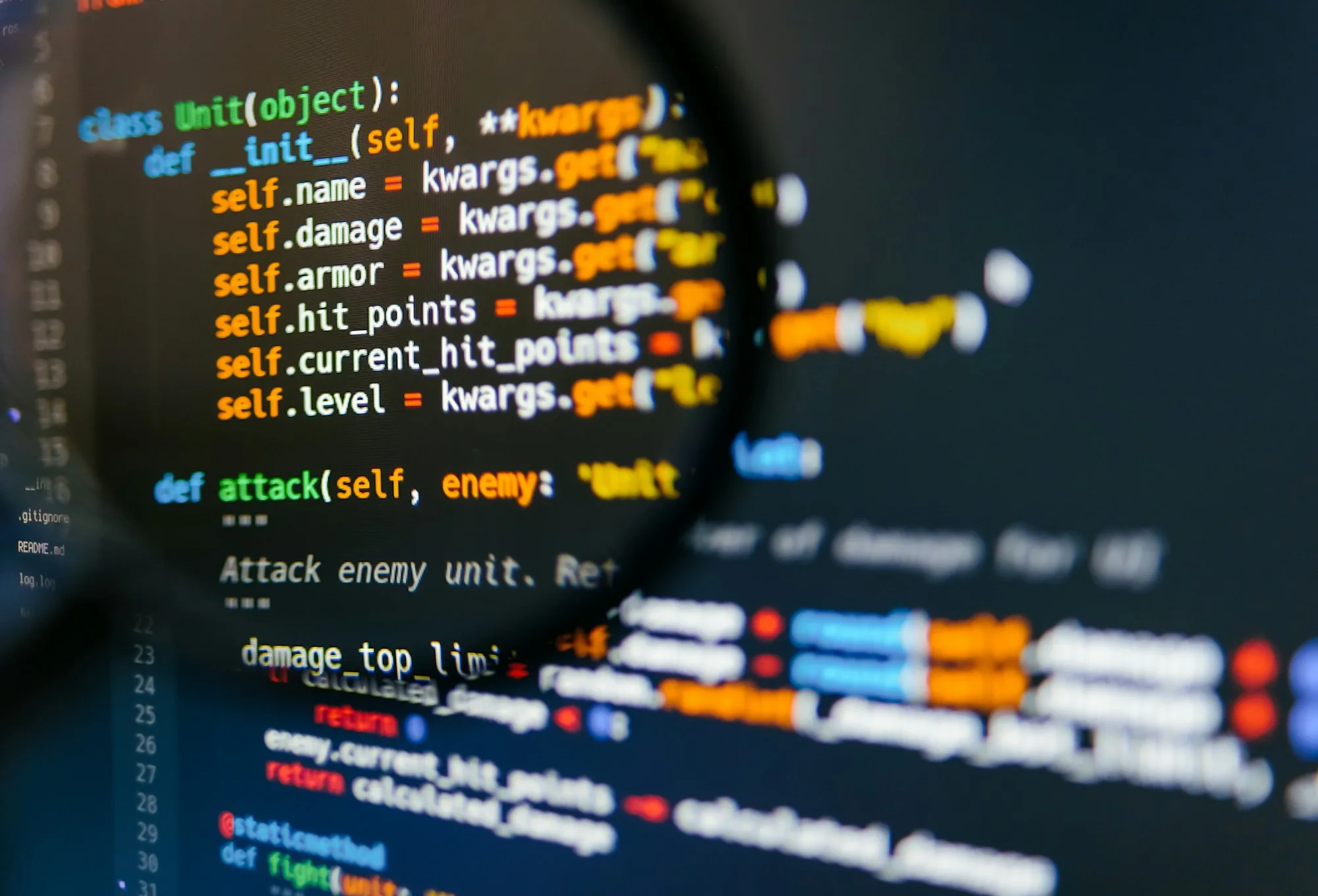
Python is the programming language most closely associated with artificial intelligence (AI). Much of the research code, teaching material and practical tooling in the field is written in it. This article explains why Python and artificial intelligence are so closely linked, what a person learns when studying the two together, and why the subject matters outside the technology sector.
Why Python
Python is a general-purpose programming language that has been in use since the early 1990s. Three qualities explain its place in AI.
- It is readable. Python’s syntax is clear and compact, and it is often recommended as a first language. A learner can concentrate on the ideas and spend less effort on the rules of the language.
- It has the libraries. A large body of free, open-source software for AI is written for Python. TensorFlow and PyTorch are used for deep learning, and scikit-learn for a wide range of classical machine learning methods. With them a programmer does not have to build standard methods from the beginning.
- It is versatile. Python is also used for web development, data analysis, scientific computing and everyday scripting, so the skill carries over to other work.
One point should be added. Python itself is not a fast language. The demanding calculations inside these libraries are carried out by code written in faster languages such as C++, and Python serves as the convenient layer through which people direct the work.
What learning AI with Python involves
Whether a person studies at a university, in a short course or independently, the content is much the same.
- Programming basics. Variables, data structures, loops and functions are the grammar of any program.
- Machine learning. This is the part of AI in which a program learns patterns from data instead of following rules written out by hand. Students usually begin with methods such as linear regression and decision trees and then move on to neural networks.
- Working with data. AI depends on data. Cleaning it, reshaping it and examining it takes a large share of the effort in real projects.
- Projects. Applying methods to a real question, however small, teaches more than exercises alone.
Some mathematics is needed as well, mainly statistics and linear algebra, for anyone who wants to understand why the methods work and not only how to call them.
Ways of learning
Formal programmes provide an ordered path, teachers to ask and fellow students to work with. Self-study is also realistic, because Python and the main libraries cost nothing and their documentation is public. Many people combine the two. In either case progress depends chiefly on regular practice.
These skills lead to several kinds of work: machine learning engineer, data scientist, software engineer, AI researcher and robotics engineer are the titles most often named. Python is also increasingly used by people who are not programmers by profession.
Beyond the technology sector
The same tools serve fields far from computing. Social scientists use Python to analyse survey results and large collections of text. Historians and linguists use it to work with digitised archives and language corpora. Journalists use it to examine public data. For these users, programming is an addition to their own discipline and not a change of profession.
There is a civic side as well. AI systems increasingly affect everyday life, and it is easier to judge what they can and cannot do with some understanding of how they are built. A basic knowledge of programming and data helps a person to ask sensible questions about such systems and about the claims made for them.
In summary
Python owes its position in artificial intelligence to its readability and to the libraries built around it. Learning the two together means learning to program, to handle data and to apply machine learning methods to real problems. The tools are free and open, and their use now reaches well beyond engineering, into research, education and public life.